Vinyl Fence Installation & Repair in Middle Tennessee
Vinyl Fencing for Middle Tennessee Homes
Vinyl fencing is the zero-maintenance option that more and more Middle Tennessee homeowners are choosing. It won't rot, warp, crack, split, or need painting — even after years of Columbia's humid summers and Brentwood's winter ice. The upfront cost is higher than wood, but you never pay for staining, sealing, or replacement boards. Over a 20-year lifespan, vinyl typically costs less than wood when you factor in maintenance.
Modern vinyl fencing has come a long way from the flimsy white panels of the 1990s. Today's vinyl is engineered with UV inhibitors to prevent yellowing, impact modifiers for strength, and titanium dioxide for color stability. The panels we install are thick, rigid, and reinforced at the post connections. They're rated for wind loads that exceed anything Middle Tennessee typically experiences.
Vinyl is increasingly popular in the newer subdivisions across Spring Hill, Franklin, and Nolensville. Several HOAs in these communities now specify vinyl in their covenants because it maintains a consistent, clean appearance year-round without the homeowner doing any work. If you're in one of these neighborhoods, vinyl may not just be a good choice — it may be required.
For how vinyl stacks up against wood and aluminum in Middle Tennessee's humidity and ice, see our guide to fence materials for the Tennessee climate. For pricing context across all materials, see the Middle Tennessee fence cost guide.
Get a free estimate
Call or text Michael at (629) 529-4765, or use the form. Photos of your yard help.
Free on-site estimates in Maury & Williamson County.
Vinyl Fence Styles We Install
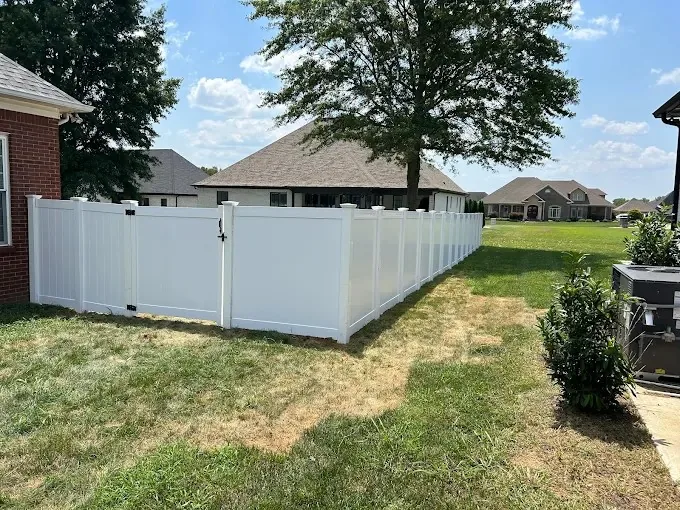
Privacy fence — solid tongue-and-groove panels that provide complete privacy with zero gaps. Available in white, tan, gray, and wood-grain textures. The most popular vinyl style in our service area.
Semi-privacy fence — panels with small gaps or lattice tops that allow airflow and light while still providing visual screening. A good compromise when your HOA restricts solid privacy fences.
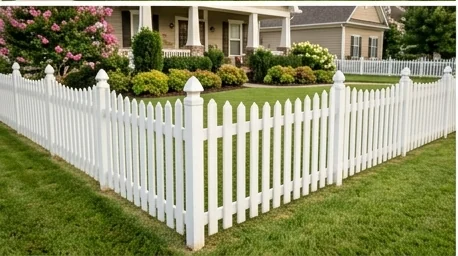
Picket fence — classic American front-yard fencing in a material that never needs painting. Available in traditional, gothic, and contemporary profiles.
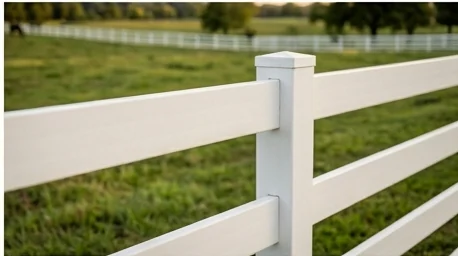
Ranch rail — two or three-rail vinyl fencing that gives you the farm fence look without the maintenance. Popular for larger lots on the edges of Spring Hill and the rural properties around Columbia where homeowners want a clean property line without the upkeep of wood.
Get a free estimate
Call or text Michael at (629) 529-4765, or use the form. Photos of your yard help.
Free on-site estimates in Maury & Williamson County.
Vinyl Fence Photos From Recent Installs
How Long Does a Vinyl Fence Last in Tennessee?
A quality vinyl fence in Middle Tennessee lasts 25–30+ years. Vinyl doesn’t rot, warp, crack, or attract termites the way wood does, which makes it ideal for our hot summers and ice-heavy winters. UV stabilizers in modern vinyl resist yellowing and fading from direct Tennessee sun. Most quality vinyl fences carry a lifetime manufacturer warranty against defects, with prorated coverage for color fading.
Vinyl Fence Cost in Middle Tennessee
Vinyl typically costs more upfront than wood but saves on maintenance over the fence’s lifetime. Approximate installed costs:
- Vinyl privacy fence (6 ft): $55–$80 per linear foot installed
- Vinyl semi-privacy or shadow box: $50–$70 per linear foot installed
- Vinyl picket fence (4 ft): $40–$60 per linear foot installed
- Vinyl ranch rail (3 or 4 rail): $25–$40 per linear foot installed
Vinyl Fence Maintenance
Practically zero. Hose it down once or twice a year — that’s it. No staining, no sealing, no painting, no rotted boards to replace. If you want a fence that looks the same in year 20 as it did on day one, vinyl is the answer. The only repair work most homeowners ever do is replacing a panel after a tree limb falls or a vehicle hits it — and individual vinyl panels swap out in under an hour.
Common Vinyl Fence Questions
Does vinyl fade or yellow in Tennessee sun? Quality vinyl with UV stabilizers (the only kind we install) resists yellowing for decades. Cheap big-box vinyl can yellow in 5–7 years — we don’t install that material.
Can vinyl handle Tennessee ice storms? Yes — vinyl is more flexible than wood and tends to bend and recover under ice load rather than snap. Posts set in concrete are the key to surviving ice storms regardless of material.
Is vinyl cheaper than wood over time? Yes, after about 8–10 years. The lower maintenance cost and longer life pay back the higher upfront price, especially compared to pressure-treated pine.
Get a free estimate
Call or text Michael at (629) 529-4765, or use the form. Photos of your yard help.
Free on-site estimates in Maury & Williamson County.